
Jefferson County’s Missing Arrest Log
JCSO offers no multi-day blotter, weekly booking log, or archive with a set publication cadence, photo rule, or pagination. The JCSO Alerts page lists Nixle alerts, not arrests. A multi-day search still pays off. An intake, a release, a news article, and a court filing can each carry a different date.
A quiet weekend proves nothing. Missing articles and empty web pages are not evidence that no arrest occurred, so ask JCSO for the person's booking record.
How to Trace the Jefferson Blotter
Because there is no official online blotter, use a source ladder:
- Check the current JCSO website and avoid its dead legacy media endpoint.
- Search ECB Publishing by date and treat Crime Beat as selected reporting.
- Submit a JCSO records request with full name, date range, agency, and known number.
- Check the Clerk docket for filed charges and disposition.
- Use Arrests Last 24 Hours when the question is strictly same-day.
What an Arrest-Log Entry Shows
These are fields to request, not fields currently displayed by JCSO.
| Field | Use |
|---|---|
| Name and booking number | Identifies the person and intake. |
| Booking date/time | Places the event within the multi-day range. |
| Arresting agency | Separates Monticello PD, JCSO, FHP, FWC, or another agency. |
| Charges as booked | States charges at intake, not final charges. |
| Bond/release | Explains later custody changes. |
| Photo, if releasable | Does not assume a public gallery. |
Weekend and Holiday Arrests
JCSO promises no weekend or holiday update. Records processing, first appearance, release, and news coverage each run on their own clock. Check several dates. Then use the county arrest hub for official record and court routes, and read any cluster of articles as coverage, not a surge.
Weekend check: Search Friday through Monday. Account for any holiday closure. A Monday article may describe an earlier arrest, while a court filing can surface later still, so ask for the exact booking period.
A multi-day view helps. It keeps a narrow calendar cutoff from hiding an event. Newspaper coverage still will not be complete. First appearance and bond decisions can happen before any article runs, and a person may be released before anyone starts searching. Current custody belongs in VINE. Ask the agency directly for that, and keep the blotter search on the historical booking event.
Archives and Retention
JCSO publishes no web archive depth. Florida GS2 sets minimum retention by record series. Booking records and commitment or release lists generally last one anniversary year after release. Jail docket books are permanent. Other series differ. Criminal investigative files can follow longer schedules tied to offense degree and disposition. Inmate incarceration files carry one anniversary year after release. Arrest-offender information may remain until obsolete, superseded, or of no further administrative value. A litigation hold, an open investigation, local policy, or archival value can also change retention. No rule keeps a name or photograph searchable online.
For an older record, gather the subject, approximate date, agency, and record type. Ask whether JCSO holds the booking card, commitment or release list, photograph, affidavit, or jail-docket entry. Court files sit with the Jefferson Clerk. State Archives staff may help with transferred collections. Still, no basis exists to assume a modern booking has transferred, and a custodian should identify the applicable series when a record cannot be located.
ECB's historical Crime Beat issues show names, alleged charges, agencies, and sometimes bond context. The publisher disclaims responsibility for release and timeliness. The local Crime Beat article is an article source, not a complete feed.
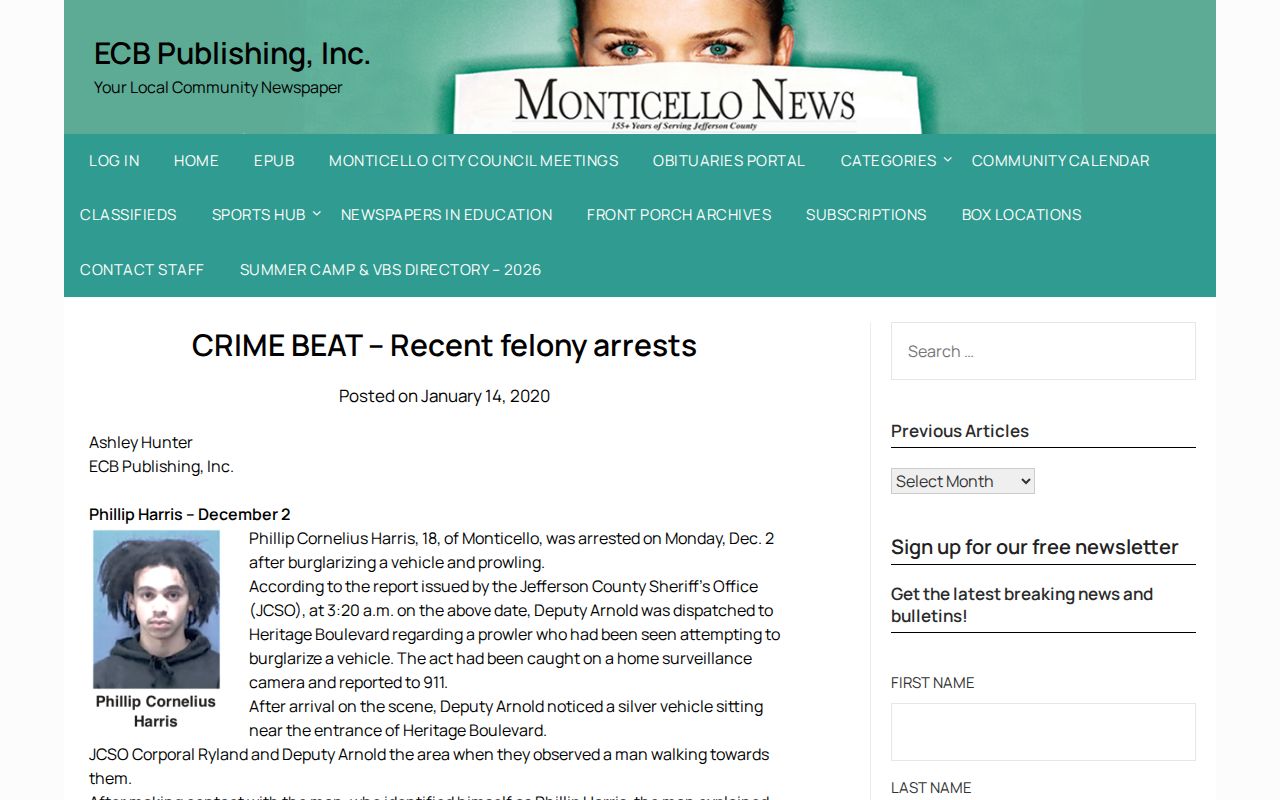
The Crime Beat format is article-based, not an official roster. An issue shows what the publisher reported that day. It cannot count county arrests or confirm current custody. For aggregate statistical context, the FDLE arrest reports interface is the state tool.
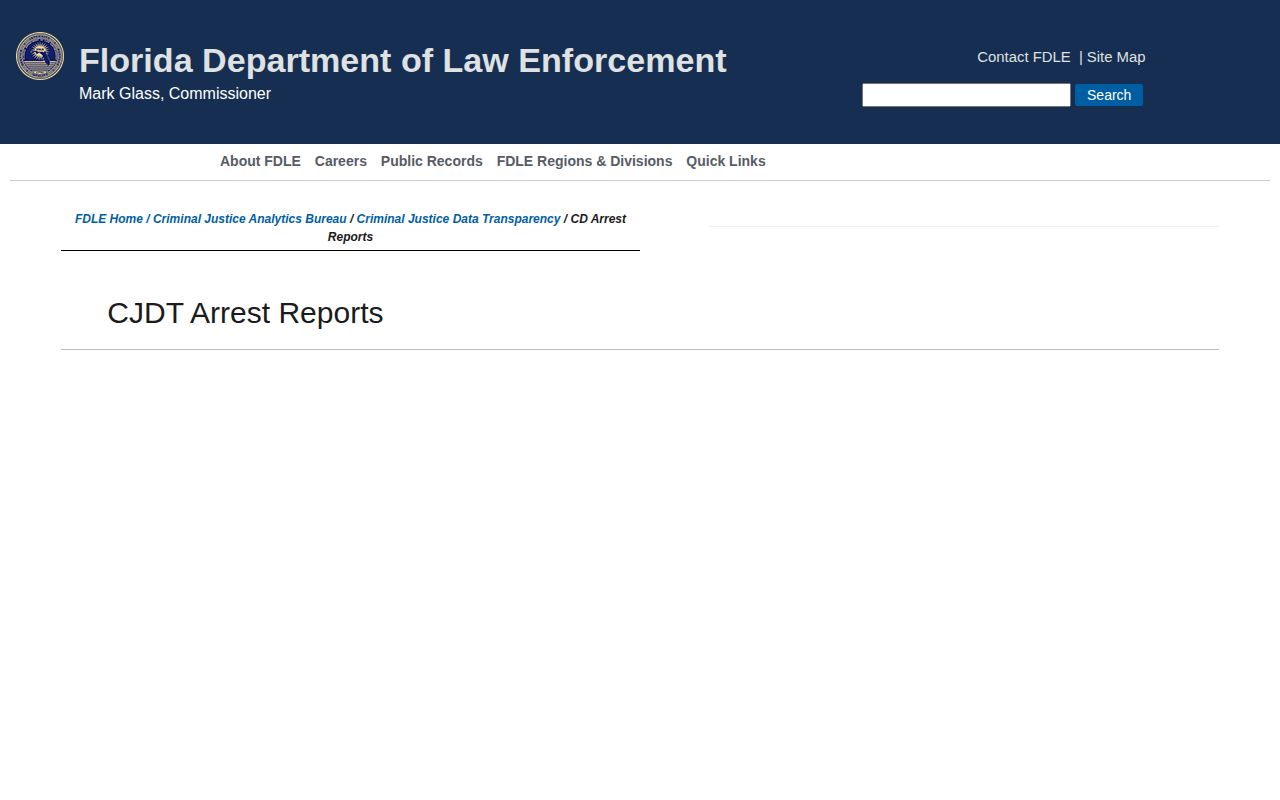
FDLE requires booking date from detention facilities. Arrest date can be absent in some submissions. The statistics offer context, not a person-level blotter, and their categories should never be reverse-engineered into claims about named people.
Local News Has a Selective Cadence
The Monticello News and Jefferson County Journal from ECB Publishing show the strongest local Crime Beat pattern. Preserved January 2020 issues carry recurring summaries. They draw on law-enforcement material. Names, alleged charges, officers or agencies, bond context, and selected photographs appear at times. The publisher expressly disclaims responsibility for the release and timeliness of JCSO-supplied reports, which makes the coverage useful for historical discovery but unfit as a guaranteed weekly roster.
WTXL's Monticello coverage is event-driven. It favors significant stories. Attribute a reported arrest to police or the arrest report, then look for later court action. Neither outlet promises every Monticello arrest. Bookings from unincorporated Jefferson County can go uncovered too.
Third-Party County Coverage Gaps
Mugshots.com does hold a Jefferson County, Florida archive. Most of what you can see there runs from 2011 through 2019. That makes it a historical collection, not a way to check who is in custody now. Its publisher can change policy at any time.
The other commercial sites fall shorter for this county. Busted Newspaper's Florida menus skip Jefferson entirely. RecentlyBooked leaves the county out, and its direct county path fails. Arrests.org has statewide filters but nothing solid for Jefferson. Mugshots Zone entries tagged "Jefferson" point to Alabama or Arkansas. One private Florida Official Records page makes booking claims. The sheriff's own site does not back them up. Stick with official sources rather than wrong-state pages or unsupported aggregator material.
Arrest Reports Need Court Follow-Up
A booking charge is a starting point. It can change or vanish once the State Attorney reviews the file. The Clerk's office explains that jail paperwork moves into the felony file. The State Attorney decides whether formal charges get filed. From there, separate events follow: arraignment, plea, diversion, dismissal, withheld adjudication, adjudication, and sentence. When cases are filed, the Clerk's felony and misdemeanor systems open their case events to the public.
A blank docket result can mean several things. Filing may still be pending. The name may differ, or the matter may sit in another division or county. A restricted record is another possibility. An empty result does not mean the arrest never happened. Match the identifiers and case number first. Then read the disposition instead of treating the booked charge as the final result.
Does an old blotter photograph establish guilt? No. A booking photo only documents an association with a reported arrest event. The county's blotter archives are the right place to verify what happened after an arrest.
Request a Multi-Day Booking Range
JCSO takes records requests several ways. Online, mail, in person, or by telephone all work. The records address is 171 Industrial Park, Monticello, FL 32344. The telephone number is (850) 997-2523, and Marie Rigdon serves as records custodian. Service hours run 8:00 a.m. to 4:00 p.m. Monday through Friday, holidays excluded.
Shape your date range with care. Keep it narrow enough to locate the arrest record yet wide enough to cover uncertain timing. List the full name and any alternate spelling. Include approximate arrest and booking dates, arresting agency, booking number, and incident or case number when known. Ask for the booking record and the charges as booked. Request bond or release data and the photograph if releasable. You may request electronic delivery. JCSO posts no booking-photo fee or guaranteed turnaround, so request an estimate before special-service work begins.
Exemptions do exist. If one applies, JCSO will identify the statutory basis in writing. Juvenile material, victim-sensitive content, sealed or expunged records, and active-investigation files can all be restricted or redacted. A lawful denial is not a claim that the arrest never happened. The Clerk's published court-copy charges cover Clerk records only. Do not assume they apply to a sheriff booking request.
Common names call for extra identifiers. A booking number beats a name alone. An incident number can tie jail intake to the arresting agency's report. Never assume the arrest date and booking date match. FDLE documentation lists booking date as required from detention facilities. Arrest date may be missing from some submissions. A carefully stated date range beats a demand for a weekly webpage that does not exist.
Save the response and every case number. Later corrections and court searches go more smoothly when the original record can be pinned down exactly. Ask for existing, specifically described public records. Do not ask the custodian to build a narrative or conduct broad research.
Public Record Search
Sponsored Results